Showing posts with label quick. Show all posts

Tuesday, October 19, 2010

Chupacabra Soup

This isn't quite a non-recipe, in the sense that you can pretty much substitute anything you want in any quantity and it'll still turn out basically the same.

But it is a highly negotiable one, with a lot of options in the meat vs vegan, bean, and chile departments.

Chupacabra might be a bit hard to find in your local grocer's meat department, since one has never actually been caught, at least as far as the USDA and FDA know. But I think the combination of shredded chicken with two cups of Dynamite chile peppers tastes about the same.

(Truth in lending here: I have no idea what a Dynamite chile pepper is. That's all they had left at this little mom and pop farmer's market I just found. Looks like an Anaheim, but I'm assuming from the name it's a wee bit hotter. Yeah, I know ... I was born at night, but not last night ... didn't just fall off the tuna truck, ya know.)

The basic recipe goes like this: shredded chicken plus beans plus a veggie combo of onions and chiles with or without tomatoes plus broth equals soup.

Hints:
  • Rotisserie chicken works great here, assuming you can't round up a chupacabra.
  • Made the last batch with half boiled chicken, half ground Jennie-O turkey. Mixing in a little ground meat was something I tried when I was short on pork loin and I wanted to make a double batch of green chile stew, and I think it adds a little depth to the dish. Same idea works here.
  • If you boil the chicken, then you'll already have a pot of brothy-water to make the chicken broth later. I've been hooked on Better Than Bouillon chicken base lately, for it's convenience, price, and most importantly taste. Bon Appetit loved it, and it's ridiculously cheap at the base commissary — about nine quarts of chicken broth for around three bucks, with no cans or cartons taking up space.
  • If you're going to add ground turkey or chicken, then brown the meat first and then cook the veggies in the same pot, so that the meat juices work into the onions and peppers.
  • Chiles: all I can say is, play around with them. It's always easier to start mild and work your way up. Kinda like unringing a bell, if you over-do the peppers, there's only so much diluting you can do later. This last batch, I used about two cups of Dynamites. I loved it, but it was too hot for M., and she had to cut the soup with sour cream. (Which is so odd, because she nearly always out-hots me under the table.)
Chupacabra Soup

Chicken: One rotisserie chicken, or a smallish over-roasted bird, or a pound or so of grilled chicken (shredded), or a pound or so of boiled chicken (again, then shredded) with maybe a pound of ground turkey, browned.
Olive oil as needed
Two small-to-medium onions, yellow or sweet (I like sweet mixed with chiles, but that's just me), medium to fine dice
3-4 garlic cloves, finely diced or minced
½ to 2 cups chile peppers (depending on your own personal taste and constitution), roasted, peeled, and diced (or, about 14-15 ounces of canned Hatch chiles)
2 cans black beans or 1 can black, 1 can pinto, rinsed
1 Tbs quality chile powder (Savory Spices is a great place to start, or grind your own.)
1 tsp cumin
2 tsp to 1 Tbs Mexican oregano
3 cups chicken broth plus more water if needed

Optional:
1-2 cups of diced tomatoes or 14-28 ounces of canned tomatoes
1 cup corn

Garnish:
Cilantro
Lime
Green onions
Strips of fresh tortillas

First, get your meat ready, either from a rotisserie chicken or by grilling or boiling chicken breasts. If you boil the chicken, then save the water for your chicken broth.

If you're using ground turkey or chicken, brown it in a large stock pot or Dutch oven. If you want, spice the meat with a little chile powder and cumin. Remove and set aside, then sauté the onions in the same pot, using the remaining fat from the meat plus as much olive oil as you need to keep the onions for sticking. Go with about medium heat for 6-7 minutes, and then add the garlic and chiles. Stir gently but frequently. If you have burnt bits on the bottom of your pot, lightly deglaze with a few Tbs of chicken broth (or a splash of wine or beer, if you happen to have some open).

Add the beans and gently stir. Add the spices and gently stir. Add the tomatoes and corn and gently stir (optional items). Then add your broth, and gently stir again before bringing the pot to a boil. Immediately turn it back down to a simmer, giving it 15-20 minutes. Then add your chicken (or chupacabra, if you found one) back to the pot.

Update: I love this technique of thickening the soup with a corn starch slurry at Edible Mosaic.

The key to this soup is managing your chiles. Too many of a too hot variety and you have jet fuel. Too few of a too mild, and you have nursing home cafeteria soup.

Tuesday, June 1, 2010

All-American Cracked-Wheat Summer Salad

A rose by any other name ... got me thinking.

"All-American Cracked Wheat Summer Salad." That's my new name for tabouli. Or tabbouleh. Or tabuleh. Or any of the other variations of this wheaty salad.

(What? Spellcheck says "wheaty" isn't a word? I'll deal with that later ...)

Seems lots of folks don't like the idea of tabouli more than they don't like what it actually is: wholesome wheat berries with summer vegetables and a light lemony sauce. Tabbouleh ... just sounds foreign. Maybe even French. And definitely hippy. Tabouli rhymes with patchouli ... can't be a coincidence, can it?

So how do you sell something like tabouli to mainstream America? Easy ... what's it made out of?

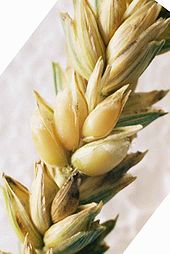
First and foremost, all-American wheat berries, one of this country's great staple crops and a $7B a year industry.

Not sure why, but folks look at bulgar wheat or tabouli and think, what is this mush? We've all heard of flour and oats and real American grains, but this has to be one of them foreign weeds, like quinoa or couscous. But bulgar wheat, or it's less processed form, cracked wheat, are just that, wheat. Wheat berries that have "cracked" or ground into various granulations for faster cooking. (In the case of bulgar, the berries are steamed first and then dried.)

So what else is in the "foreign" salad? There's cucumbers, an American favorite during the summer. Tomatoes, found in every Big Mac and on so many front porches in container gardens or those upside-downy hanging contraptions. Lemon juice, another summer fave. Salt and pepper. And a mix of herbs familiar to most any American home garden, like mint or parsley.

Crazy stuff, eh?

And it's easy to make, and you know how Americans hate anything that's easy to make. The wheat doesn't even have to be cooked. You can just steep it in hot water and you're done. (If you want to get crazy, you can saute it in broth with onions and garlic, but that's totally optional.)

And it's versatile. Another things Americans hate. There are about 50 different ingredients that can go into tabouli, and you only need 5 of them or so, so you can mix it up and never have the same salad twice.

It travels well, and we know how Americans hate summer picnics and barbecues. There's not mayo to go bad in the heat like potato salad. Basically, keep it out of direct sunlight and it will last all day.

And finally, it's healthy. (Okay, sarcasm off, we're not so crazy about healthy things, as a nation. But we're getting better.) There's nothing in it but whole grains and fresh vegetables. Because you're using ground wheat berries, you still have a lot of the protein from the wheat. There's a skosh of healthy fat from the olive oil. Add some chopped chicken breast for a bit more protein, and you have a near-perfect post-work-out recover meal.

So, support American wheat farmers and serve up some All-American Cracked Wheat Summer Salad.

Basic Recipe:
One cup bulgar wheat or cracked wheat
Two cups boiling water
2 Tbs olive oil
Juice from two lemons
Half cup mixed herbs, chopped (mint, parsley, cilantro, etc)
Half cup diced veggies (cucumber, tomato, red pepper, onion, green onion, garlic,
Salt and pepper to taste.
Optional:
half cup chick peas
half cup shredded Romaine lettuce


Pour the boiling water over the bulgar and let it steep for 30 minutes. Meanwhile, dice your veggies and finely chop your herbs. When the bulgar is ready, add veggies and then olive oil / lemon juice.

Notes:

You can really play with all of the proportions. In some parts of the world, this is really a parsley salad with a little bit of cracked wheat, not the other way around. You can up the herbs, then, to a full cup or more with no problems. The more wheat, the more lemon juice it can handle, and you'll see as much as half a cup per cup of bulgar in some recipes. Onions ... red, yellow, sweet, or green all work. Most cultures call for lots and lots of parsley, but we've made it with 100% cilantro and loved it. Technically, that's probably not "tabouleh," but then again, we're not so worried about labels here.

Farm Facts:

Agriculture employs 21 million people—more than seven times as many workers as the U.S. automotive industry.

Agriculture is one of the few sectors of the economy that consistently runs a trade surplus.

For every dollar Americans spend on food, farmers only get 20 cents.

95% of U.S. farms are run by families, farmer partnerships or co-ops.

Today's farmer provides food for about 140 people—up from just 19 people in 1940.

"Farming looks mighty easy when your plow is a pencil, and you're a thousand miles from the corn field." - President Dwight D. Eisenhower

"The farmer is the only man in our economy who buys everything at retail, sells everything at wholesale, and pays the freight both ways." - President John F. Kennedy

Saturday, March 27, 2010

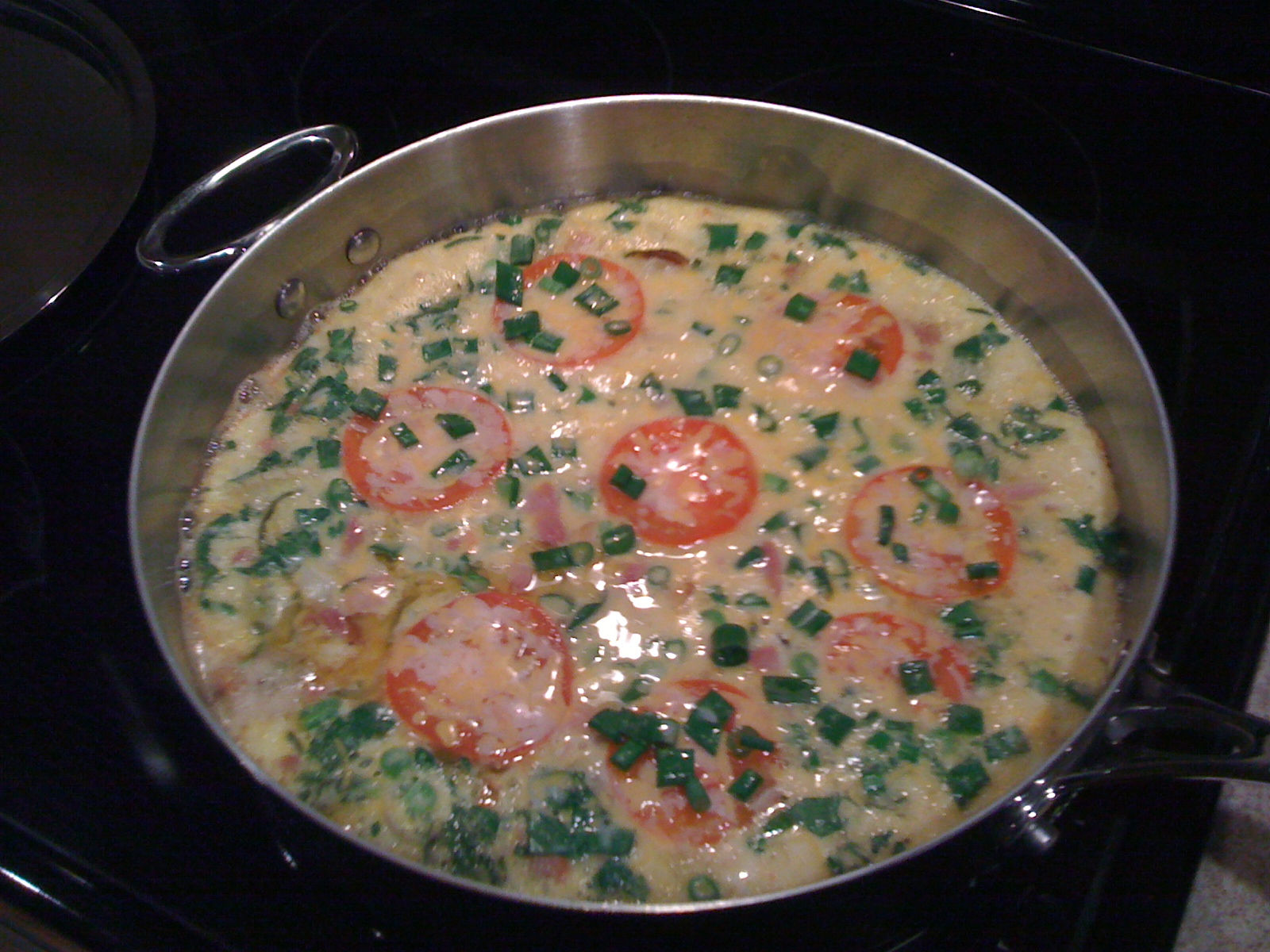
Kitchen Sink Frittata

I'm not sure what I would do if I was forced to give up eggs. Scrambled with a side of toast and bacon. Scrambled with green chiles in a breakfast burrito. Boiled just right for egg salad. Soft boiled with lots of salt and fresh cracked pepper. Fried hard for a quick sandwich, with cheese and a slice of tomato. Breakfast, lunch, or dinner.

And in this tough economy, at about a dime each, eggs are the most cost-effective way of getting protein. A dozen of large are just north of a buck at our grocer, and as high as $3 for the hippie eggs. That's still just a quarter an egg, or $2 for all the eggs you need for this frittata that serves four easy.

Throw in two bucks worth of veggies and this meal is a dollar per serving. So take that, you drive-thru, dollar menu clowns.

So here you go. Read the entire thing, then go back to the beginning and pick your ingredients. You have five minutes of prep, then just watch it cook. 30 minutes start to finish.


Everyone's selling frittata pans these days, but any oven-proof pan will work by starting it on the stove and finishing in the oven.

The Base:
8 large eggs
1/2 cup milk or cream (preferably not skim, but skim will work if that's all you have)
1 Tbs flour
salt and pepper to taste


In a very large measuring cup or mixing bowl (about 4 cups) mix all of the above.

Then add any of the following:

The Kitchen Sink:
  • Up to 2 cups of veggies and meat: Bacon, sausage, chorizo, canadian bacon, pancetta, or you name it. Fresh red or green bell peppers, mushrooms, jalapeños, onions, spinach, summer squash, or, again, you name it. Steam some asperagus and cut into one-inch pieces. Microwave some diced potatoes. The only caveat is, if you use sauteed or cooked veggies, let them cool before adding them to the egg mixture.
  • Half to a full cup of cheese: Any hard or soft cheese will work. Try crumbled feta or goat, or grated cheddar, or packages of mixed Italian or Mexican cheeses. Note, if using salty cheese, like feta, then take it easy on the salt in your egg mix.
  • Herbs and spices: Sprinkle enough spice to cover the top of your egg mix, then whisk into the mixture until blended. Try red pepper flakes, garlic, green onions, or basil, cilantro, or parsley.
Here's the last bit of your hands-on. Heat your oven to 350°. In an oven-proof pan, heat enough butter or olive oil to cover the bottom of the pan over medium heat. Medium, not medium-high. Get your egg mix ready, and then give the pan a twirl to make sure the oil touches the sides of the pan. Slowly pour the egg mix into the pan, cover, and let it sit on medium heat for about a minute. Then turn the stove down to low and give it about 7 minutes. Check the egg, and when the eggs are set about an inch from the side, you're ready. Depending on your ingredients, this might take up to 12 minutes, so just keep checking.

Then uncover the pan and move it to the oven. Set the timer for 15 minutes, but again, because of your ingredients, it might take up to 25 minutes to finish. You're going to bake it until the top is completely set. Watch the very center; when the center is set, you're done.

If you're using an omelet-style pan, you can slide the frittata to a cutting board. We use a straight-sided pan and just cut it in the pan with a sharp plastic spatula. If you let it cool for two minutes, it will pull away from the pan and will be easier to serve.

Serve it as-is or with salsa. A side salad, green or fruit, goes well with this dish. Or, cut it into one inch squares for an hors d'oevre.

Tuesday, February 23, 2010

Spicy Black Bean Soup with Irish Soda Bread

There's a band out there that calls itself the Afro Celt Sound System. Founded by members of the Pogues (the sometimes folk, sometimes pop, sometimes punk Celtic band), they blend Irish melodies with West African rhythms to create an always interesting musical hybrid. I think that's sort of why St Patrick's Day is such an endearing holiday. The Irish may not lead the world in any particular industry or art form, but they make for a nice mix in everything they do. It's a culture that is easily incorporated into everyone else's.

As Tim Allen once said, the great chefs of Ireland ... now there's a short list for you. The Emerald Isle might not be known for any truly groundbreaking dishes, but a little bit of it goes well with just about everything else out there.

And the same is true for Mexican fare. You can throw a little bit of Mexican spice into just about any culture's offerings and do quite well, and there's a salsa that will accent just about anything from anywhere.

I was getting ready to make our Spicy Black Bean Soup, and this recipe for Irish Soda Bread leaped out at me. Typically we make some guac to go with this soup, but I didn't have an avocado handy, and hot bread sounded good to dip into the soup and soak up the last bit from the bowl. Irish and Mexican ... two great things that go great together.

And, in keeping with our recent theme, a very economical meal. The soup features one of the all-time great utility players, the chipotle pepper in adobe sauce. You can score a can of these for right around a buck, and you only need 1-2 peppers per dish, so we're looking at 10-20¢ for a major spice upgrade. The soup features about $1.50 in beans, $2-4 in sausage (depending on brand), $1.00 in chicken stock, and pennies for spices, for 5-6 bowls. And the bread costs you about $1.25 in flour, brown sugar, butter, baking soda, and butter milk.

Quick digression ... Mexican spices are one of the great deals I've found in this part of the country. I have no idea whether everything we have in Colorado is available nation-wide, but we are never in want for jalapenos, cilantro, or other produce staples. I can get a 1.5 oz bottle of McCormick's oregano for around $3, or an 8 oz pouch of Mexican oregano for $1.50.


Spicy Black Bean Soup

2 tablespoons extra-virgin olive oil
1 medium onion, finely chopped
1½ teaspoons minced garlic (about 3 cloves)
1 canned chipotle chili, seeded and finely chopped
1 teaspoon ground cumin
1 teaspoon dried oregano
3 15-ounce cans black beans, drained and rinsed
4 cups low-sodium chicken broth
1 12-ounce package smoky cooked sausage, such as andouille, thinly sliced
2 tablespoons lime juice
¼ cup finely chopped cilantro
Salt and freshly ground pepper
Sour cream and lime wedges for serving

In a large saucepan, heat the olive oil until shimmering. Add onion and cook over moderate heat until softened—about 3 minutes. Add garlic, chipotle chili, cumin and oregano and cook until fragrant, stirring occasionally. Add beans and broth and bring to a boil. Reduce heat, partially cover and simmer for 15 minutes. Coarsely crush some of the beans using a potato masher.

Meanwhile, cook sausage in a large skillet over medium-high heat until lightly browned. Add sausage to the beans, along with the lime juice and cilantro.
Season with salt and pepper and simmer for 2 minutes. Serve with sour cream and lime wedges.


Irish Soda Bread

I halved the recipe here so that we wouldn't have too many left-overs. The half-size made enough bread for four.


1.5 cups of all-purpose flour
1.5 cups of whole wheat flour
1/4 cup brown sugar
1/2 tsp baking soda
2-3 Tbs of butter, chilled*
1 cup buttermilk**

* put the butter in the freezer until your ready to use it, then slice it into tiny slivers, then rotate and slice again.
** or one cup whole milk with one Tbs white vinegar or lemon juice (mix well then rest for 5-10 minutes)

Preheat the oven to 425º. If using a baking stone, preheat the stone as well. If using a heavy baking sheet, line with parchment paper or lightly grease.

Mix the flours, sugar, and baking soda until uniformly mixed. Add the chilled butter and work it into the flour with a fork until the butter nearly disappears — about half-pea sized pieces. Make a well and mix in the buttermilk, stirring very gently until the liquid is gone.


Pour the dough out onto a lightly floured cutting board or counter top and knead for 10-12 turns. Then shape the dough into a ball about twice as wide as it is tall. Place the ball onto your stone or baking sheet and mark it with an X (any sharp knife will do, about 1/2 inch deep). Bake for about 35 minutes.

Saturday, February 6, 2010

What a bargain!

I've been meaning to do this for a while. Thanks partly to the economy, but mostly just because I'm a dork, I started calculating the cost per serving of some of our meals. Unfortunately, I usually do this in the middle of supper with a beer in hand, so I need to start from scratch and better document the process.

But the results have been surprising, in a good way.

Before I begin, a quick caveat: thanks to access to the local Air Force base commissary, I'm getting some great deals on the key ingredients. Chicken, for instance, is always under $2 per pound. The five dollar sack of King Arthur flour goes for two-and-a-quarter. But the downside is, the commissary never carries house brands, so for other items it's cheaper to look elsewhere. One example is butter. I can get the house brand at King Soopers for $1.50 - $1.80 a pound, but the cheapest name brand butter at the commissary is Land o' Lakes at around $2.75. King Soopers also always beat the commissary on milk and eggs. Another example, Sunflower Farmer's Market always has the best prices on produce, period, and it's nearly all local. This week, roma tomatoes were $2.49 at the local grocer, $1.49 at the commissary, but 99¢ for organic, grown in our next door neighbor of New Mexico, at Sunflower.

(I know, I know ... the whole "buying local" thing can get a bit annoying ... but I have started to notice a huge difference in taste between an item that was grown down the road and the same thing, shipped across one or more borders. I can get imported celery for $1.49 a pound at the local grocer, or home grown celery at Whole Foods for $2.49. Sounds like a big price difference, but I know that I'm going to eat about half of the $1.49 celery and pitch the rest, while the Whole Foods celery will both stay fresh longer and taste so much better that I'll eat every last stalk, sans peanut butter or cream cheese. Same with carrots ... cost about twice as much, but we're guaranteed to eat every last one.)

But back to my point ... here's what we have so far:

World-class Mountain Granola, about 50¢ per serving (one cup). Hard to price-compare to Quaker Natural, because they use a half-cup per serving estimate and the price varies from $3.50 to $4.50 per 14 oz box, but using the cheapest price I could find (a six-pack from Amazon for $19), we beat them by a dime per bowl.

Quick Coq au Vin: around $2.00 per serving.

Bánh Mì: about $1.75 per sandwich

Posole: Less than $1.50 per bowl, including a warm tortilla on the side

No-rise Cinnamon Rolls: 25¢ per serving (two rolls)

Grandma's Apple Pie: 75¢ per slice (recipe coming tomorrow)

Now, what to do with all of that money that I'm saving ...

Wednesday, January 20, 2010

Super-quick non-recipe Coq au Vin

I knew I had all of the ingredients for coq au vin, but I wasn't sure how much time I had to get it ready before M. got home. And I knew we had about seven different recipes for it, so I was left in a predicament: do I grab the first one I see, or take a few minutes to scan them all to figure out which one is the quickest? Because I wasn't looking for the original version, with the cognac flambé, but just a quick last-minute throw-together version.

I went with the latter, and somewhat fortuitously, the first one I found was called "Quick Coq au Vin." Bingo! That had to be it. But there was something now quite right about it. It called from frozen pearl onions. Frozen pearl onions? Never bought any such thing, so this clearly wasn't the recipe I had played with before.

So I left that book out and kept looking, and low and also behold, the next one was also called "Quick Coq Au Vin." Ahh, mon Dieu! Now, what I should have done right there was to just start cooking, but something struck me about these two menus. They had different pictures, but the fonts looked remarkably similar. One called for chicken parts, the other for chunks of breast meat. But the moving pieces were laid out the same: brown chicken, sauté veggies, deglaze and create your sauce, simmer. So instead of getting to work, I spent a few minutes browsing. And noticed the really weird thing: that both recipes were from the same magazine, one from the original magazine and one from a reprint collection. Same magazine, same title, very similar but completely different.

And that's when I realized that this was one of those dishes that really doesn't have a recipe. It's more of a technique, or a starting point. There's no such thing as having the right ingredients for this, because there is no such thing as "right." One of the recipes called for frozen boiling onions, the other for leeks. One started with bacon to help flavor the chicken, the other was straight-up olive oil. One used the traditional mix of carrots and onions and mushrooms, and the other used red grapes.

But the process was the same. And it's the process that makes the wine sauce that coats the chicken and veggies and soaks into your noodles, potatoes, rice, or whatever side-dish you want to add.

So instead of a traditional recipe, here's a process-centric version with a pick-and-choose ingredient list.

Meat: 1-2 pounds of chicken. Maybe 4 bone-in thighs and 4 drumsticks or boneless breasts, cut into 1-2 inch cubes or strips. Dust with a few Tbs of flour, salt and pepper.

Sauté: 2-3 Tbs of olive oil, or 3-4 slices of bacon plus 1-2 Tbs olive oil.

Veggies: 3-4 cups total, pick from julienned leeks, thinly sliced onions, mushrooms, carrots, maybe a tiny bit of celery.

1 Tbs tomato paste, maybe a few cloves of garlic.

Deglaze: 1 cup red or white wine plus 1 cup chicken broth. (Adjust based on the size of your pan and the amount of chicken and veggies you have.)

A dash of thyme or sprig of fresh thyme. Maybe a couple of Tbs of butter to thicken the sauce.


Chicken with bacon, veggies waiting their turn

Season the chicken with salt and pepper and dredge in the flour. Or, put the salt, pepper and flour in a bag, add the meat, and shake. Whatever.

Grab a huge non-non-stick pan with a lid. (Yes, non-non-stick. You want the chicken and veggies to stick just a little.)

If you're using bacon, fry the bacon, remove the cooked bacon, and add a Tbs or two of olive oil to the bacon fat. Or, just heat the olive oil over medium high heat. Brown the chicken on all sides, then remove and set aside.

You'll have some burnt bits (fond) on the pan. Don't worry about it.

Add the veggies in the order of longest cooking to quickest cooking. Do not crowd the mushrooms! Keep the heat up to medium high and gently stir so as not to bruise the veggies. (I just made up that last part.) Sauté for 3-4 minutes or so, maybe a bit longer for onions and leeks.

Stir in the tomato paste and optional garlic. Sauté for another 2-3 minutes, stirring frequently until the tomato paste is evenly distributed.

Now for the money move. Add your wine to deglaze and scrape up anything that stuck to the pan. Turn up the heat just a skosh, and let the heat and wine soften up the fond so that it gets incorporated back into the sauce. Return the chicken back to the pan, sprinkle with the thyme, and add the chicken stock or broth. Bring it all to a boil, then reduce to medium-low, cover, and simmer for 20 minutes. Watch it closely for the first couple of minutes, just to make sure that it doesn't boil over, but after that, you can let it go.

Maybe, if you're feeling crazy, add a Tbs or two of butter to the final product and stir in. Not necessary, though.

Serve over mashed potatoes, egg noodles, or any other starch.

Thursday, January 14, 2010

No-Rise Cinnamon Rolls (which makes them sort of a cinnamon biscuit / scone / muffin / roll)

No yeast but 4 tsp of baking powder make these "rolls" more like biscuits. To me, they're just as good as traditional, but just a little different. I actually prefer the more biscuity texture, instead of the doughy, bready feel of your standard roll. And since they take about 20-25 minutes of hands-on time, it's worth it to give them a shot just once. If they're not your thing, go back to the yeast rolls.


Ready for the belly. Maybe the world's ugliest cinnamon rolls, but wicked easy. One notch harder than opening the Pillsbury tube.


2 cups flour
2 Tbs sugar
4 tsp baking powder
1 tsp salt
1/4 cup butter, ice cold, baby
1 cup milk
1/3 cup butter
1 cup brown sugar
3 tsp ground cinnamon

Optional: 1/4 to 1/3 cup of raisins, currants, or almonds. (We went with almonds today. Like how they caramelize when they bake in the brown sugar / butter mix.)

Frosting:
1/2 cup powdered sugar
Splash of milk


Grease your muffin tin. Mix the 1/3 cup butter, brown sugar, and cinnamon together. Put 1 tsp into each of cup of the tin. Save the remaining mixture for your roll filling.


bit of brown sugar and cinnamon that will soak up into the rolls


In a largish bowl, combine flour, sugar, baking powder, and salt. Cut in 1/4 cup butter.

* Side: I hate cutting butter. Never get it quite right. But then I read Scott Peacock's description in his American Classics series. Makes a lot of sense, and easy to follow instructions.


In your flour mix, make a well in center and pour in the milk. Slowly stir until you have a smooth dough.

Turn dough out on lightly floured cutting board or counter top. Knead about 10 times. Roll out into rectangle about 1/4 inch thick and a foot long. (That's 12 inches, and you have 12 muffin cups ... so guess how thick each cut will be when you're ready to make your rolls.)

Spread the remaining cinnamon mixture over dough rectangle. Sprinkle the almonds or raisins (optional) onto the cinnamon mix. Roll up so you have a foot long roll, and the cut into 12 slices. Instead of measuring, just cut it in half, and then each half in half again. Then cut each of those pieces into three equal pieces.


Bake at 400º F for about 20 minutes. If your rolls are nice and tight, the cinnamon mix will stay put, but mine were a bit loose and the mix bubbled over the top. I needed to put an extra baking sheet until the muffin tins to catch the overflow.

The rolls should pop right out as soon as you take them out of the oven. Drizzle the tops with your powdered sugar / milk glaze.