Showing posts with label health. Show all posts

Friday, July 30, 2010

End of July Food News

Wandering through the papers this week ...

Korean Tacos gain momentum. There are several things I like about this trend. First of all, I just personally think the fusion of Korean BBQ with Mexican garnishes just plain works. It's like twins separated at birth, and when you get them back together, you realize that there's something in their DNA that makes them fit. Second, I love the movement towards healthier fast food, a la Chipotles, Garbanzos, Wahoo's Fish Tacos. And third, you gotta love the groundswell of well-appointed restaurants and pedigreed chefs taking their craft to the streets. In Denver, we've always had Biker Jim's Gourmet Dogs, but lately he's been joined by GastroCart and the Steuben's Food Truck. 'Cause let's face it — Americans are never going to stop eating fast food, but at least now we can feel good about it.


Pez Cycling interview with Willy Balmat. This won't mean much to 99% of you, but Willy's been a hero of mine forever. A very distinguished chef in the traditional sense, having worked at some major restaurants around the world over the year, what makes him special is that he's been the team chef for professional bike teams for a quarter century. And not just any old teams, but 7-11, Motorola, US Postal, Discovery, Garmin, and now Cervelo. What a career, and what stories he must have.


Beat the heat with a handful of ice cream recipes, from the Atlantic.

Why do we like the food that we like? And specifically, why do we like bitter foods instead of just sweet and savory ones? Paul Bloom discusses that very issue with the editors at SEED magazine and with Ira Flatow on Science Friday.


Field to Plate: We're in the middle of serious farmers market season, and to find out what's in season in your neck of the woods, check out these state-by-state calendars here.


Ready for August? August is National Catfish Month, National Panini Month, National Peach Month, and National Sandwich Month. For the day-by-day "holidays," visit Foodimentary.


Sharing powerful stories from his anti-obesity project in Huntington, W. Va., TED Prize winner Jamie Oliver makes the case for an all-out assault on our ignorance of food.


Monday, June 28, 2010

Food News You Can Use

News from around the horn:

From Big Red Kitchen, this cool iPhone app and website from AlaskaSeaFood.org, all about cooking frozen fish. No, not the fish sticks from elementary school cafeterias, but fresh-frozen sea food.


Actor/commedian Sarah Silverman joins the school lunch improvement movement. Big ups to Sarah, Woody Harrelson, and Scarlett Johansson for lending this voice to a problem we have ignored for way too long.


On NPR, more news on the basil blight that's quickly moving through this country.


Is local / organic farming sustainable? Lots of folks think, no, according to Heather Rogers at the American Prospect.


Why do we like the food that we like? Paul Bloom peels back the onion on pleasure in SEED.


Good Magazine is teaming up with Let's Move to help raise awareness about childhood obesity. Check out their infographic contest.

Tuesday, June 1, 2010

All-American Cracked-Wheat Summer Salad

A rose by any other name ... got me thinking.

"All-American Cracked Wheat Summer Salad." That's my new name for tabouli. Or tabbouleh. Or tabuleh. Or any of the other variations of this wheaty salad.

(What? Spellcheck says "wheaty" isn't a word? I'll deal with that later ...)

Seems lots of folks don't like the idea of tabouli more than they don't like what it actually is: wholesome wheat berries with summer vegetables and a light lemony sauce. Tabbouleh ... just sounds foreign. Maybe even French. And definitely hippy. Tabouli rhymes with patchouli ... can't be a coincidence, can it?

So how do you sell something like tabouli to mainstream America? Easy ... what's it made out of?

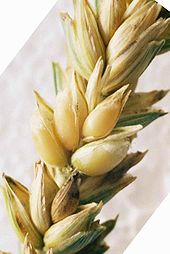
First and foremost, all-American wheat berries, one of this country's great staple crops and a $7B a year industry.

Not sure why, but folks look at bulgar wheat or tabouli and think, what is this mush? We've all heard of flour and oats and real American grains, but this has to be one of them foreign weeds, like quinoa or couscous. But bulgar wheat, or it's less processed form, cracked wheat, are just that, wheat. Wheat berries that have "cracked" or ground into various granulations for faster cooking. (In the case of bulgar, the berries are steamed first and then dried.)

So what else is in the "foreign" salad? There's cucumbers, an American favorite during the summer. Tomatoes, found in every Big Mac and on so many front porches in container gardens or those upside-downy hanging contraptions. Lemon juice, another summer fave. Salt and pepper. And a mix of herbs familiar to most any American home garden, like mint or parsley.

Crazy stuff, eh?

And it's easy to make, and you know how Americans hate anything that's easy to make. The wheat doesn't even have to be cooked. You can just steep it in hot water and you're done. (If you want to get crazy, you can saute it in broth with onions and garlic, but that's totally optional.)

And it's versatile. Another things Americans hate. There are about 50 different ingredients that can go into tabouli, and you only need 5 of them or so, so you can mix it up and never have the same salad twice.

It travels well, and we know how Americans hate summer picnics and barbecues. There's not mayo to go bad in the heat like potato salad. Basically, keep it out of direct sunlight and it will last all day.

And finally, it's healthy. (Okay, sarcasm off, we're not so crazy about healthy things, as a nation. But we're getting better.) There's nothing in it but whole grains and fresh vegetables. Because you're using ground wheat berries, you still have a lot of the protein from the wheat. There's a skosh of healthy fat from the olive oil. Add some chopped chicken breast for a bit more protein, and you have a near-perfect post-work-out recover meal.

So, support American wheat farmers and serve up some All-American Cracked Wheat Summer Salad.

Basic Recipe:
One cup bulgar wheat or cracked wheat
Two cups boiling water
2 Tbs olive oil
Juice from two lemons
Half cup mixed herbs, chopped (mint, parsley, cilantro, etc)
Half cup diced veggies (cucumber, tomato, red pepper, onion, green onion, garlic,
Salt and pepper to taste.
Optional:
half cup chick peas
half cup shredded Romaine lettuce


Pour the boiling water over the bulgar and let it steep for 30 minutes. Meanwhile, dice your veggies and finely chop your herbs. When the bulgar is ready, add veggies and then olive oil / lemon juice.

Notes:

You can really play with all of the proportions. In some parts of the world, this is really a parsley salad with a little bit of cracked wheat, not the other way around. You can up the herbs, then, to a full cup or more with no problems. The more wheat, the more lemon juice it can handle, and you'll see as much as half a cup per cup of bulgar in some recipes. Onions ... red, yellow, sweet, or green all work. Most cultures call for lots and lots of parsley, but we've made it with 100% cilantro and loved it. Technically, that's probably not "tabouleh," but then again, we're not so worried about labels here.

Farm Facts:

Agriculture employs 21 million people—more than seven times as many workers as the U.S. automotive industry.

Agriculture is one of the few sectors of the economy that consistently runs a trade surplus.

For every dollar Americans spend on food, farmers only get 20 cents.

95% of U.S. farms are run by families, farmer partnerships or co-ops.

Today's farmer provides food for about 140 people—up from just 19 people in 1940.

"Farming looks mighty easy when your plow is a pencil, and you're a thousand miles from the corn field." - President Dwight D. Eisenhower

"The farmer is the only man in our economy who buys everything at retail, sells everything at wholesale, and pays the freight both ways." - President John F. Kennedy

Monday, May 3, 2010

One in Three

One in three.

In a lot of competitive programs, on the first day of training the instructors will tell the candidates: look to your left, and then look to your right. Come graduation day, one of you won't be here.

Now imagine you're in an elementary school classroom. Ask the kids to all look to their left, then look to their right. One of those three will develop Type II diabetes, according to the CDC.

That's where FoodCorps is trying to make a difference. From their website:

FoodCorps responds to the needs of the current “obesity generation.” According to the Centers for Disease Control and Prevention, one in three children born in the year 2000 is on track to develop Type II diabetes. For minorities, the prediction worsens to one in two.

The program addresses this multi-faceted epidemic with a mechanism that, as philosopher Wendell Berry says, “solves for pattern.” The simple tool of a schoolyard garden positively addresses six of the eight contributing factors to obesity identified by the CDC. Gardens that engage children provide better food choices, encourage physical activity, reduce sedentary behavior, and lead to healthier environments at home, at school, and in the community.

Further, the CDC has singled out Farm to School as part of a community based solution to the obesity epidemic.

Building on the leadership of the White House Garden and the USDA People's Garden Initiative, the President's Task Force on Childhood Obesity, and model programs in states like Montana, Iowa and Wisconsin, FoodCorps will help bring healthy food infrastructure to the schools facing the most severe challenges of diet-related disease.


I can't get that number out of my head. One in three.

Think about your kids, and their closest friends, teammates, neighbors. How many is that? Now, pick one-third of them to get Type II diabetes.

And the worst part is, the kids aren't doing anything wrong. It is the adults in their lives who are failing them.

(Hat-tip to 5 Second Rule.)

Tuesday, April 13, 2010

How to Live to be 100

Dan Buettner shares the 9 common diet and lifestyle habits that are found in the world's longest living communities.


Now we've seen everything

The new KFC Double-Down.

I really thought this was just a publicity stunt, but apparently it's real.

Surely the combo meal comes with a tray of doughnuts, an XXXL Snuggie, and a bottle of Lipitor.

Tuesday, February 23, 2010

The Kids Are Alright

The Winter Games are on. I'm not sure if the Winter Games are significantly different than the Summer Games in this aspect, but I find myself marveling at the kids who are performing on the international stage. There are so many teenagers out there who, despite their youth or maybe because of it, are the masters of their universe, the top dogs in their particular field. The figure skaters, snowboarders, aerialists have freshly printed driver's licenses, and still need their folks' permission to see most of the shows at the local megaplex.

So the kids must be alright, then, yeah? If teenagers can compete in the Olympics on a regular basis, then they must all be in tip-top shape, right? Well, that's the dichotomy of our fitness-obsessed culture. Everything that we have learned about nutrition, exercise, and athletic performance has made the top 1% that much better, but there doesn't seem to be much of a trickle-down effect. While more and more kids are making it to the elite ranks of their sport, fewer and fewer kids across the board are getting the recommended levels of exercise.

And maybe it's only an illusion that even the top 1% of kids today are doing better. It might very well just be that marketing and advertising makes these kids more noticeable. After all, Jim Ryan broke the 4 minute mile mark as a 17 year old back in the '60s, and forty years later, the record for the high school 1600m is pretty much right where it was in his day. High school track and field records are not improving at the same rate as elite records are, anecdotal evidence that even the best of the best aren't that much better than their grandparents were.

I'll leave it to the Freakonomics folks to break down the numbers over the years, but I think it's a safe assumption that our kids could use a hand in putting down the remote, the Wii, or the cell phone, and lacing up their running shoes and beating the pavement. And this initiative from out First Lady is a good start.

(Hat tip to One Ordinary Day.)


Tuesday, February 16, 2010

Guiness Shout-out

With St Paddy's Day right around the corner, here's some good advice, as if you need another reason to opt for a glass of Gaelic black gold. (Although, if you're drinking the draught canned version, you're supposed to drink it out of the can, unless they've changed their packaging yet again — see also, rocket widget.)

Visit msnbc.com for breaking news, world news, and news about the economy


Bonus points to the first one to identify the origin of "super colon blow."

Wednesday, February 10, 2010

Food and Geography

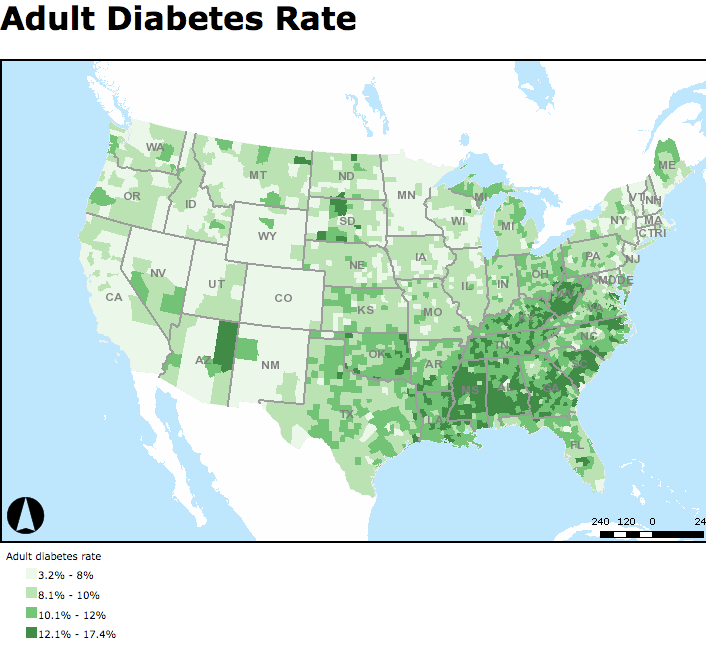
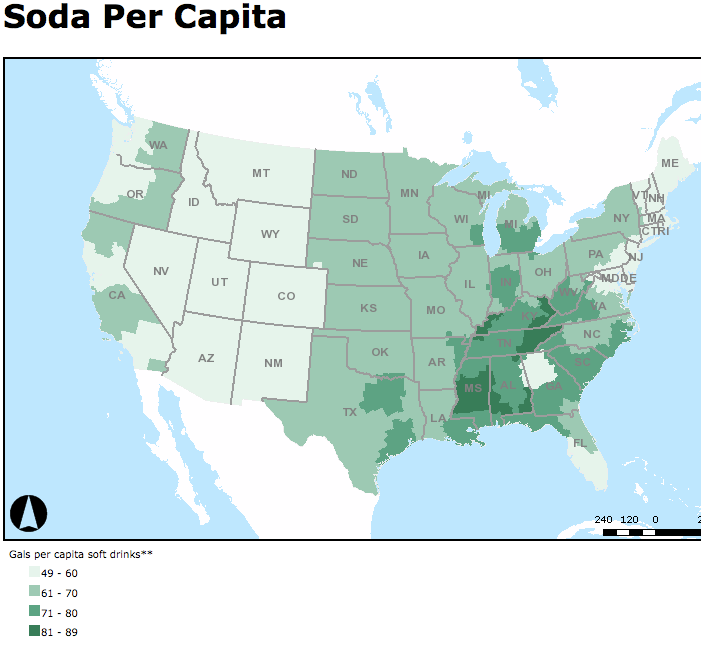
A couple or three scary maps from the USDA's Food Atlas that fairly clearly lay out the correlation (if not the causation) between food choices and health issues.

(Hat tip to La Vida Locavore.)

First up, note the link between soda consumption and adult diabetes.


This one's interesting: direct-to-consumer (farmer to consumer) food sales. I'd have to really dig into US Ag numbers to make sense of this, but it sure doesn't look like there's a correlation between a region's agricultural output and the prevalence of CSAs and farmer's markets. In other words, the more a region makes, the more likely they are to ship it out. You'll find direct-to-consumer food sales not so much where the food is grown, but where the Wal-marts aren't. We grow a lot of food in southern California, Texas, Florida, Georgia, and South Carolina ... but we ship all of that food elsewhere (or, at least, package it for re-sale at grocers and big box stores). Meanwhile, in the Pacific Northwest, New England, and Colorado / New Mexico, folks are buying more of their food directly from the grower.


Tuesday, February 2, 2010

Chicken Noodle Soup with Cheddar Scones ...

... that's really more of a stew than a soup. Actually, it's more of a casserole, except that it's not baked, in that it could almost be eaten with a fork. In fact, in the original recipe, it called for whole chicken pieces, but somewhere along the way we decided to shred the chicken.


It's still technically winter, and meteorologically (word? should be) it's typically the coldest part of the winter these days. Still flu and cold season, and everyone's Granny knows chicken soup is good for what ails you.

So here's an in-between chicken soupish concoction that can be slapped together in a moment's notice, when nothing else soups good and you need a bowl/plate of something hot that smells like home.

About 45 minutes total, which includes 25 minutes of simmer time where you can work on something else. I like this particular one because you put the chicken breasts in whole, so you don't have to worry about cross-contamination with your knives or cutting boards. Just one less thing to worry about, and one step closer to sitting down to eat.

We also like the frozen egg noodles, which are a bit gummier than dried noodles and soak up the chicken flavor.

4-5 cups of chicken stock
1 medium onion (yellow or sweet)
3 celery ribs, sliced down the middle and then cut medium-fine
3 carrots or one bag of baby carrots, cut into 1/4 inch chunks or medium-fine slices
1 bay leaf if you have it

One package chicken breasts, 3-4 breasts, 1.5-2.5 pounds or so
2 teaspoons dried sage
1-2 teaspoons salt
.5-1 teaspoon black pepper (both to your taste)

1 pound frozen cavatelli, dumplings, or egg noodles.

2 Tablespoon each butter (slightly softened) and flour. You can get these two out at the beginning, and the butter should be soft enough by the time you need it.

In a large Dutch oven or stock pot, simmer the chicken stock, onion, celery, carrots, and bay leaf for about 5-10 minutes. Add the whole chicken breasts, sage, and salt/pepper. Simmer for 25-30 minutes covered or partially covered. Flip the chicken a couple or three times to make sure it cooks evenly.

Once this is going, cook the frozen noodles according to its instructions. This usually takes about 15 minutes — 5-10 minutes to get the water boiling, then 10 minutes of cooking time.

At this point, you can opt to serve the chicken breasts whole, which means you'll need a knife, fork, and spoon when it's eating time. Or, you can take two forks and pull the chicken apart into bite sized pieces.

Mix the flour and butter until smooth. Push as much of the chicken and veggies as you can to the side of the pot and spoon the butter/flour into the liquid in the middle. Stir or whisk into the soup, and then add the noodles. Simmer for a couple more minutes so the noodles absorb some of the flavor and everything is evenly heated. Serve in soup bowls or shallow pasta bowls.

Let's go back to the simmer time. Once the soup / stew is ready to simmer, you can either clean up the kitchen or whip up some biscuits. If you choose the latter, here you go.

Dry ingredients, can be prepped ahead of time:
2.5 cups all-purpose flour
1/4 cup sugar
1 Tbs baking powder
1 tsp sea salt or kosher salt
6 Tbs butter, cold, cold, cold
1 cup shredded Cheddar

Preheat the oven to 450º. Mix the flour, sugar, powder, and salt, and then cut in the butter and add the shredded cheese. Lightly combine.

Mix and stir in:
1 cup butter milk *
1 egg, beaten

* No butter milk? One cup of plain yogurt works, or put one Tbs of either vinegar (white or cider) in a measuring cup and fill with milk to the one cup line. Let it stand for 10 minutes to thicken.

Pour the liquid into the dry and very lightly combine just until mixed. Line a baking sheet with parchment paper (or not) and scoop 1/4 cup of the batter for each biscuit. They'll rise just a bit, so space them out 1-2". Bake for 15 minutes. Should be ready just in time for the soup.

Sunday, January 31, 2010

January Nutrition News and Odds and Ends

Scanning the funny papers ...

1. Tons of school lunch news these days, starting with La Vida Lacovore. If you have a school-aged child, in public or private school, or if you pay taxes that support a school, or if you eat food, you owe it to yourself to at least scan the headlines at La Vida Locavore.

A teacher in Illinois has been buying her school's lunch every day and posting her experience on her blog, "Fed Up: The School Lunch Project." Even a simple PB&J turns into an agro-business nightmare.

And here's a look at the anti-school lunch reform movement, the nutritional equivalent of the Know Nothing Party, I guess.


2. Vitamin D: Miracle Drug or Hype?

Interesting piece on the potential benefits of Vitamin D.

However ...

This one article sums up just about everything that we need to keep in mind when reading about the latest research on just about anything.

“Correlation does not necessarily mean a cause-and-effect relationship,” said Dr. JoAnn E. Manson, a Harvard professor who is chief of preventive medicine at Brigham and Women’s Hospital in Boston.

... [S]ince most of the data on vitamin D comes from observational research, it may be that high doses of the nutrient don’t really make people healthier, but that healthy people simply do the sorts of things that happen to raise vitamin D."

3. A simple breakdown of the differences between whey protein and soy protein here, at VeloNews.

4. Everyone has been talking about watching too much TV lately. A study in Australia found that watching TV is correlated not only with diseases associated with a lack of exercise, such as heart disease, obesity, and high blood pressure, but also an increase in death by all causes. In a nutshell, it comes down to our general lack of not just exercise but activity. You can work out all that you like, but that's only 30 minutes to an hour or so out of the 24 hour day. If you spend the rest of the day sitting in front of a computer or shuffling papers, and then add even more sitting down to your leisure activities, then the smidgen that you dedicate to working out pales in comparison. And as David Munger of ResearchBlogging.org says, "Out of the hundreds of thousands of years Homo sapiens has existed, we’ve been intensely physically active for all but a few of them."

5. A look at the mental health of Virginia Woolf and its impact on her work, from the folks at Seed.

6. Interesting side-trip here at Bang Goes the Theory, a BBC show that mixes Myth Busters with NOVA. How much energy does the average family use, in terms of cyclists pushing generators?

Tuesday, January 26, 2010

January's News You Can Use

A quick jaunt around the newsroom ...


1. Weight lifting is good for your brain. From the NYT's Well. Seems like the more we learn about the brain, the more we find that it's just one big muscle, capable of all kinds of growth and change and modification and re-routing.

2. LA Times Health and Fitness: All Fibers Are Not Created Equal. A quick look at sources of naturally occurring fiber and how the supplemented, processed foods measure up. If you're on a low-carb diet or just plain eating too much junk, you need to think about this one.

3. Hal Walters looks at olive oil. "While most other dietary oils are virtually absent of phytonutrient phenols, extra-virgin olive oil, obtained from the whole fruit using the cold-press technique, is very high in phenols."

4. More on brain health. From Dr Phil Maffetone, fourteen things you can do just about every day to keep your brain ticking. Seven here and seven more here.


5. Running barefoot is getting more and more attention, but this web-based shoe retailer wants you to reconsider the risks. Hmmmm ... sounds like he's realized that it's hard to sell air to barefoot runners.


6. One of the things I find fascinating about education is how much inertia is in our systems and infrastructure. Teachers should be on the cutting edge of just about everything, should be innovative and open to new ideas. But throw them an idea that requires them to get off their butt and change, and you'd better get ready for some serious whining. Case in point: it makes zero sense to ask kids to clean their plate and fill their bellies, then send them out to the playground. Zero sense. And yet, only around 5% of schools schedule recess before lunch.

The Well: Play, Then Eat

(When it comes to education, we should frequently ask ourselves, if we were designing this from scratch, is this what it would look like? I think we'd be surprised how often we'll answer that question with a "no," and yet how infrequently we'll do anything about it.)

Thursday, January 14, 2010

Weekly Highlights for Jan 14

1. From endurance athlete and world champion burro racer Hal Walters, home-made energy bars.

Homemade real-food energy bars
By Hal Walter


2. Growing and Repairing Your Brain, Dr. Phil Maffetone and Dr. Coralee Thompson

The brain, after all, is just a muscle, albeit one we are only beginning to understand. Check out Dr Phil's thoughts on working it.

  • Eat more brain food and avoid processed carbohydrates
  • Move your body—walking, dancing, swimming, etc.
  • Get more sun exposure—without sunscreen
  • Live your passion—find things you're crazy about doing; and do them
  • Get more sleep
  • Change routines often
  • Perform respiratory biofeedback (AKA “The 5‐Minute Power Break”)
(The original 7 ideas are here.)


3. Is the Military Getting Soft? Interesting discussion. I'm ashamed to admit this, but the day after the Ft Hood tragedy, the NYTimes ran a front page photo of Ft Hood soldiers doing PT. And instead of feeling anger at the murderer or empathy for the victim's families, my first thought was, damn, soldiers are fat these days.


4. Running Barefoot: Trend of the still very New Year. The running barefoot discussion is really heating up. It's not quite at teaparty-esque momentum, but there is a certain grassroots feeling to it, with the little people going up against the big corporate giants who are scheming to keep our little piggies trapped in their over-priced coffins.

Check out this piece in the February Runners' World.

Sunday, January 3, 2010

The Power of Time Off

Oh, if it were only this easy ... taking a year off to recharge the batteries. But maybe there are little bits and pieces that anyone can apply to their own particular circumstances.

In my group session the other day, we listed meaningful activities, things we do to recharge. And funny but no one listed watching TV or updating our Facebook status. And yet, when we have the choice, how many of us do exactly that instead of taking the time for something that makes us feel better?

Stefan Sagmeister: The power of time off


Sunday, October 11, 2009

Rules to Eat By

As always, an interesting and thought-provoking piece from Michael Pollan.

Rules to Eat By


Here at the Training Table, we have our own kitchen manifesto, as you can see if you look at the far right column and scroll down a wee bit.

What are your rules to eat by?


Thursday, August 6, 2009

Weekly Highlights

Here's a quick wrap-up of some highlights in the news this week.

1. Sabores Sin Fronteras, Flavors Without Borders.

The Sonoran Hotdog Crosses The Border

Was just thinking about my dad's comments about the suddenly ubiquitous chipotle pepper, and heard this on the radio about recipes moving back and forth across the border.

Americans' view of the U.S.-Mexico border is pretty narrow these days — basically, drugs and illegal immigrants.

Of course, there's more than that if you live there. There's the area's tasty food — Baja California fish tacos, Tex-Mex fajitas and the newest cross-border concoction: The Sonoran Hot Dog.


2. There's no problem getting enough sun in the summer time, right? Not so fast.

Soaking up more of the sunshine vitamin for improved performance, at VeloNews.

As you continue to train and race for the remainder of the season, learning about your vitamin D status and focusing on your vitamin D intake from food and supplements might actually improve your performance. While there is limited data on vitamin D status in athletes , (let alone cyclists), some experts believe that poor vitamin D status can often be a problem among athletes, and affect your overall health and ability to train.

3. No tomatoes for your pizza? Then how about blueberries?

The Weirdest Pizza I’ve Ever Made, at Bitten.

When Kerri sent me this picture, right, I said “but was it good?” She said “terrific.” I said, “send it.” It’s gorgeous and bizarre, and it qualifies as “pizza,” but … check it out. —MB

4. Are your kids getting enough water? Or, are they drinking too much crap?

Phys Ed: Are Sports Drinks Actually Good for Kids?

No one suggests that, outside of fields or courts, sports drinks are wise. “These are not health foods,” Clark says. “They’re fancy sugar water. You see kids having them with their pizza at lunch. That’s not a good idea.” Sports drinks have been linked with obesity and tooth decay. They’re also expensive. Finally, consider nagging, an underutilized means of improving young athletes’ hydration status. When the kids at the sports camps were asked why they didn’t drink more often, one of their most common responses was, “I forgot.”

5. Simple fitness test: how long can you hold your breath?

Measuring Fitness and Health: Part 1, Breathing, by Dr. Phil Maffetone

Breath-Holding Time is a simple test that measures the overall function of the diaphragm. It’s simple to perform. Take a deep breath and see how long you can hold it. This test is best performed while standing and with an empty stomach. Anyone in good health should be able to hold the breath for at least 50 seconds. If you can’t, it may indicate some functional problem, as discussed below.

6. Summer salad dressing: Cilantro and Green Chili. Mix, enjoy, repeat.